Blog Topics
Understanding Stem Cell Research Pros and Cons: A Scientific Perspective on Autologous Regenerative Therapy in Japan
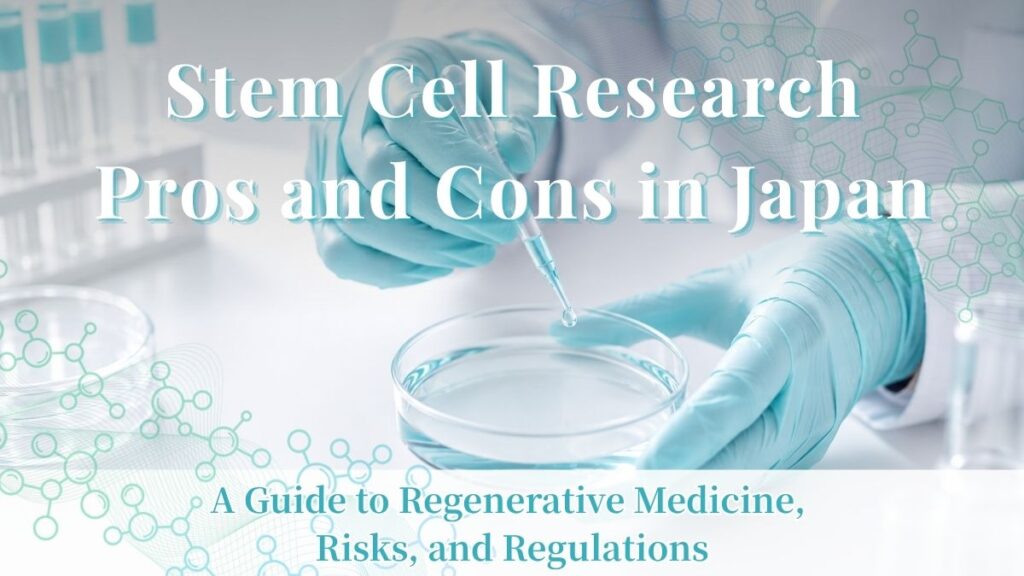
Science often moves faster than public perception. When individuals begin evaluating stem cell research pros and cons, the conversation frequently tangles itself in outdated ethical debates or exaggerated claims. This guide focuses specifically on the pros and cons of autologous adult stem cell therapy in a clinical setting, providing an objective overview of its potential benefits and limitations. At Blu CLINIC (Osaka & Ginza, Tokyo), Dr. Saori Shimada maintains a strictly evidence-based approach. Our clinical focus is placed entirely on autologous adult stem cells—cellular material derived from your own body. This specific medical framework shifts the dialogue away from theoretical controversy, grounding it in regulated, biological realities.
Beyond the Headlines: The Reality of Modern Stem Cell Research and Applications

No simple miracles. Just calculated, documented science.
The term “stem cell” carries immense cultural weight, often conflated with experimental embryonic studies. In truth, clinical applications within modern medical facilities rely on distinct, scientifically categorized cell types. Our medical team utilizes mesenchymal stem cells (MSCs) and fibroblasts, which are carefully cultivated in specialized domestic cell processing facilities (CPC).
These cells are derived from the client’s own tissue rather than from embryonic sources. MSCs are obtained from a small amount of abdominal fat, while fibroblasts are collected from the skin behind the ear. By relying on autologous materials, this approach avoids the specific ethical concerns associated with the use of embryonic stem cells, while raising a different set of clinical considerations related to safety, processing, and individual variability.
The Scientific Pros: How Stem Cell Research Advances Regenerative Care
Tissue repair at a cellular baseline.
The core advantage of autologous stem cell therapy lies in its inherent biological mechanism. Rather than introducing foreign synthetic materials into the body, the treatment utilizes the client’s own biological framework to support tissue repair and address functional decline.
| Scientific Mechanism | Clinical Application |
| Autologous Compatibility | Cells derived from the client’s own body present a minimal risk of immune rejection compared to donor cells. |
| Targeted Cellular Cultivation | Culturing at a specialized CPC allows for controlled cellular multiplication prior to administration. |
| Structural Support | Fibroblasts specifically contribute to the dermal layer, supporting the natural structure of the skin over time. |
Navigating the Cons: Risks, Misconceptions, and Limitations
Honest medicine requires transparent risk assessment.
No medical procedure is devoid of risk, and clients must evaluate the cons objectively before proceeding with any cellular therapy. A significant drawback is the potential for physical discomfort. Clients frequently experience temporary pain, swelling, redness, and bruising at both the collection and injection sites.
Still, biological variability remains the most critical limitation. The viability and activity level of stem cells differ significantly from client to client, influenced by age, lifestyle, and overall health. Outcomes are never uniform. Some individuals may experience transient fevers or allergic reactions, and in rare instances, infections, may occur.
Embryonic vs. Autologous Adult Stem Cells: Resolving the Ethical Controversy
Ethical clarity through self-derived cellular material.
Much of the public hesitation regarding stem cell therapy stems from decades-old debates over embryonic stem cells (ESCs). ESC research requires the destruction of human embryos, a practice that faces intense moral and religious opposition globally.
Autologous adult stem cells operate on a completely different ethical plane. Because the cells are harvested voluntarily from an adult client’s own fat or skin tissue, the ethical dilemma associated with embryonic research is bypassed.
Japanese Regulatory Framework: How Strict Oversight Ensures Client Safety
Strict. Transparent. Regulated.
Japan has established one of the most rigorous legal structures in the world for regenerative medicine. Under the Act on the Safety of Regenerative Medicine (ASRM), all regenerative treatments must be formally filed and scrutinized.
Blu CLINIC operates strictly within this legal boundary. Our cell therapies are notified to the Ministry of Health, Labour and Welfare (MHLW) as Class II Regenerative Medicine. Clients can independently verify our operational status through our formal submissions: (Provision Plan Numbers) Osaka Clinic: No. PB5260002 (Fibroblast) & No. PB5260003 (Systemic/Pain) / Ginza Clinic: No. PB3260093 (Fibroblast) & No. PB3260095 (Systemic/Pain). This level of regulatory transparency is a critical factor for international clients seeking a secure medical environment.
Clinical Considerations: Longevity, Realities, and Investment Value
A measured perspective on biological investment.
Cellular therapies require both time and financial commitment. The culturing process alone demands 3 to 5 weeks in a highly controlled environment (clients may flexibly return home during this period). The financial structure reflects the specialized nature of CPC cultivation and individualized medical care.
| Therapy Type | Plan Level (cell count) | Standard Cost (Tax Included) |
| Fibroblast (Full Face) | Light 80million | ¥1,650,000 |
| Standard 120million | ¥2,420,000 | |
| Premium 160million | ¥2,970,000 | |
| MSC Therapy | Light 100million × 3sessions | ¥6,050,000 |
| Standard 150million × 3sessions | ¥7,920,000 | |
| Premium 200million × 3sessions | ¥9,900,000 |
Additional MSC administration is available at ¥1,650,000 per session.
Personalizing Cell Therapy at Blu CLINIC: The Osaka Standard of Medical Hospitality

Discreet care in a private environment.
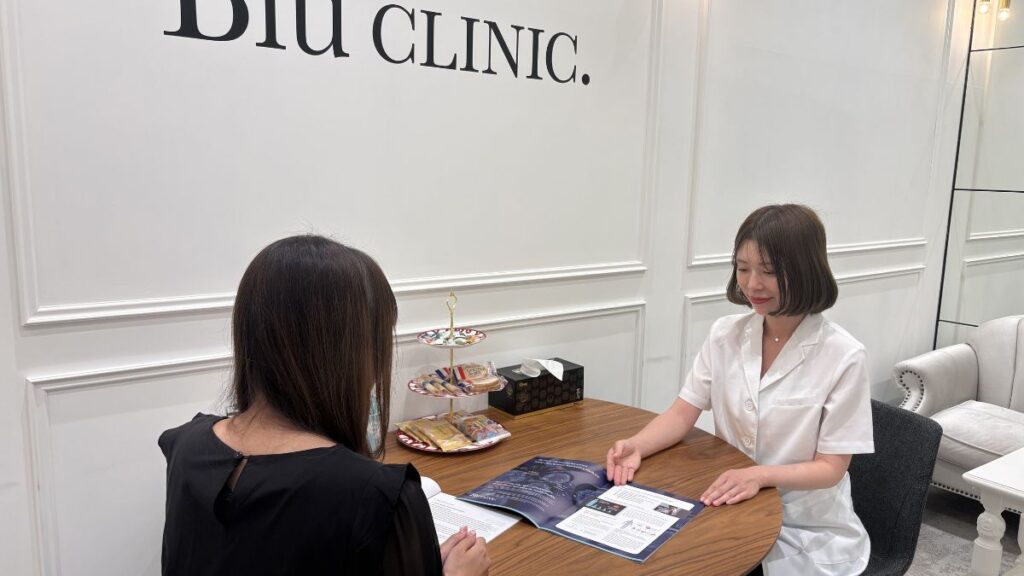
Stepping away from the bustling streets, our clients enter a quiet, meticulously designed private space in our Osaka and Tokyo clinics. At Blu CLINIC, we believe that cell-level care is the foundation of personal well-being. Under Dr. Saori Shimada’s clinical approach, every protocol is tailored to the individual’s specific biological baseline.
We coordinate logistical details to ensure medical focus remains uninterrupted. From complimentary transfers from Kansai International Airport (KIX) to professional medical interpretation services (included at no extra cost), the environment is designed for client security and comfort.
Frequently Asked Questions Regarding Stem Cell Research and Therapy
The main cons involve physical side effects and biological unpredictability. Clients often experience pain, swelling, or bruising at injection sites. Because therapies rely on the client’s own cells, individual health factors dictate the cellular response, meaning clinical outcomes vary widely.
Adult stem cells—like those used at Blu CLINIC—are derived from the adult client’s own tissue, such as abdominal fat or skin behind the ear. Because they do not require the use or destruction of human embryos, they do not involve the specific ethical issue associated with embryonic stem cell research.
The longevity of stem cell activity is not a fixed metric. Once administered, cells integrate and interact with surrounding tissues based on the individual’s biological environment. Variables such as lifestyle, aging, and preexisting health conditions directly influence how long the supportive cellular mechanisms remain engaged.
This depends entirely on a client’s medical objectives and risk tolerance. It requires a significant financial investment (ranging from ¥1,650,000 to over ¥9,900,000) and patience during the 3 to 5-week culturing phase. It is a scientifically grounded option for those seeking autologous tissue support, rather than a rapid, synthetic fix.
Japan is widely recognized for its well-structured legal framework for regenerative medicine. The Act on the Safety of Regenerative Medicine (ASRM) mandates that medical institutions submit formal provision plans to the Ministry of Health, Labour and Welfare (MHLW), ensuring treatments are administered under strict regulatory oversight.
Contact & Support
To discuss your medical history and explore whether autologous cell therapy aligns with your health objectives, please reach out to our medical concierges.
Autologous Adipose-Derived Stem Cell Therapy (MSC Therapy)
[Treatment Details] A treatment where stem cells derived from a small amount of adipose tissue and blood collected from the patient’s abdomen are cultured at an affiliated domestic cell processing facility (CPC), then administered via IV drip or injection.
[Standard Treatment Period & Sessions] Cell culturing takes approximately 3–4 weeks, and administration consists of 3 sessions in total per course.
[Standard Cost] ¥6,050,000 – ¥9,900,000 per course (Tax included) / Private-pay (Not covered by public health insurance). (*Additional administration: ¥1,650,000 per session.)
*Note: Counseling is free of charge, and required preliminary blood testing upon arrival as well as medical interpreter services are included in the treatment package at no extra cost.
[Risks & Side Effects] Pain, swelling, redness, and bruising at the collection or injection sites, transient fever, allergic reactions, and in rare cases, infection or breathing difficulties.
[Notes on Unapproved Products]
(i) This treatment uses regenerative medicine products that have not received approval under Japan’s Pharmaceuticals and Medical Devices (PMD) Act.
(ii) The cells used in this treatment are cultured and processed at an affiliated domestic cell processing facility (CPC) under the physician’s medical judgment, in accordance with Japan’s Act on the Safety of Regenerative Medicine. No personal importation of drugs is involved.
(iii) There are no other domestically approved drugs or medical devices with the same composition or performance.
(iv) Information regarding safety in foreign countries: This treatment has not been widely approved in major Western countries. There is a possibility that severe risks or side effects have not yet been fully identified.
(v) In the unlikely event of a severe side effect, this treatment is not covered by Japan’s Relief System for Sufferers from Adverse Drug Reactions or the Relief System for Infections from Biological Products.
Fibroblast Therapy
[Treatment Details] A treatment where fibroblasts extracted from skin tissue collected from behind the patient’s ear are cultured at a specialized cell processing facility (CPC), then transplanted directly into the dermal layer of areas where wrinkles and sagging are a concern.
[Standard Treatment Period & Sessions] Cell culturing takes approximately 3–5 weeks, and administration consists of 2 to 4 sessions in total, typically every 2 weeks.
[Standard Cost] ¥1,650,000 – ¥4,840,000 per course (Tax included) / Private-pay (Not covered by public health insurance).
*Note: Counseling is free of charge, and required preliminary blood testing upon arrival as well as medical interpreter services are included in the treatment package at no extra cost.
[Risks & Side Effects] Pain, swelling, redness, and bruising at the collection or injection sites, temporary unevenness, and in rare cases, infection.
[Notes on Unapproved Products]
(i) This treatment uses regenerative medicine products that have not received approval under Japan’s Pharmaceuticals and Medical Devices (PMD) Act.
(ii) The cells used in this treatment are cultured and processed at an affiliated domestic cell processing facility (CPC) under the physician’s medical judgment, in accordance with Japan’s Act on the Safety of Regenerative Medicine. No personal importation of drugs is involved.
(iii) There are no other domestically approved drugs or medical devices with the same composition or performance.
(iv) Information regarding safety in foreign countries: This treatment has not been widely approved in major Western countries. There is a possibility that severe risks or side effects have not yet been fully identified.
(v) In the unlikely event of a severe side effect, this treatment is not covered by Japan’s Relief System for Sufferers from Adverse Drug Reactions or the Relief System for Infections from Biological Products.
For more details on costs and treatment options,
please join our local information session.