Blog Topics
What is Stem Cell Therapy? A Scientific Guide to Autologous Adipose-Derived MSCs in Advanced Medicine
This article explores the question, “What is stem cell therapy?” and explains its basic definition, biological mechanisms, and treatment methods. At Blu CLINIC (Osaka & Ginza, Tokyo), under Dr. Saori Shimada’s clinical direction, we provide autologous Mesenchymal Stem Cell (MSC) protocols grounded strictly in documented science. This guide outlines the legal framework, costs, and safety standards for regenerative care in Japan.
What Is Stem Cell Therapy? Definition, Benefits, and Treatment Methods
Stem cell therapy is an advanced medical procedure that utilizes cultured multipotent cells—primarily autologous adipose-derived Mesenchymal Stem Cells (MSCs)—to support the body’s natural tissue repair and maintenance mechanisms. Rather than offering a temporary fix or masking symptoms, stem cell therapy relies on living biological material harvested directly from the patient’s own tissue to support the maintenance of systemic cellular health.
The primary therapeutic benefit of MSC therapy stems from the “paracrine effect.” Once reintroduced into the body, these stem cells actively secrete growth factors, bioactive proteins, and immunomodulatory cytokines. This paracrine activity helps regulate inflammatory responses, support biological communication between damaged tissues, and encourage the body’s intrinsic restorative processes.
The procedure follows a highly controlled clinical methodology: first, a small amount of subcutaneous abdominal fat is collected under local anesthesia. The harvested tissue is then sent to a certified Cell Processing Center (CPC), where the MSCs are carefully isolated and cultured over a period of 3 to 4 weeks. Once optimal cell counts are achieved, the expanded stem cells are administered back into the patient via intravenous (IV) drip for systemic circulation or localized injection for targeted tissue care.
The Regulatory Framework of Regenerative Medicine in Japan
Structured guidelines. Transparent medical protocols.
Japan maintains strict legal standards for facilities providing cellular therapies. Blu CLINIC is an established medical institution that has filed its regenerative medicine provision plans with the Ministry of Health, Labour and Welfare (MHLW). Our MSC treatments are classified as Class II Regenerative Medicine under the Act on the Safety of Regenerative Medicine (ASRM).
Specific therapeutic protocols are documented and submitted for rigorous review.
(Provision Plan Numbers)
Osaka Clinic: No. PB5260003 (Systemic/Pain) & No. PB5260002 (Fibroblast)
Ginza Clinic: No. PB3260095 (Systemic/Pain) & No. PB3260093 (Fibroblast)
The entire cultivation process occurs within specialized domestic CPCs, ensuring that biological materials are handled according to established national safety frameworks.
Clinical Safety Profiles and Potential Side Effects
Transparency first. Every medical intervention carries inherent risks.
Autologous therapies utilize the client’s own biological material, lowering the risk of severe immune rejection compared to allogeneic (donor) cells. Still, adverse reactions can occur. Following the initial fat extraction or cell administration, clients may experience localized pain, swelling, redness, and bruising. Transient fever and mild allergic responses have also been documented in clinical settings. Severe complications, such as infection, are statistically rare but remain a documented possibility. Our medical team monitors these physiological reactions closely throughout your time at Blu CLINIC.
What to Expect: The Treatment Timeline and Experience at Blu CLINIC

Stepping off a long flight. With conveniently located clinics in both Osaka (a 3-minute walk from Osaka-Umeda Station) and Tokyo (walking distance from Higashi-Ginza / Ginza Stations), Blu CLINIC ensures a seamless, highly private experience.
The process of receiving MSC therapy requires time for cellular cultivation. Clients traveling from overseas must account for specific scheduling constraints.
| Procedural Phase | Clinical Action | Estimated Timeline |
| Initial Assessment & Fat Harvest | Preliminary blood testing (included in package) and extraction of abdominal fat | Day 1 (First Visit) |
| Cell Cultivation Phase | Specialized expansion at the affiliated domestic CPC | 3 to 4 weeks (Clients may return home or remain in Japan) |
| Cell Administration | Systemic IV drip or targeted injection at Blu CLINIC | Day 2 (Second Visit or end of stay) |
To assist inbound clients, we provide complimentary transportation from Kansai International Airport (KIX) . Professional medical interpretation is included in the treatment package at no extra cost to ensure clear communication of all medical nuances.
Financial Considerations and Insurance Policy for Private-Pay Therapy
Clear structures. No hidden fees.
Cellular medicine at Blu CLINIC falls entirely under private-pay treatment. It is not covered by Japanese public health insurance or international health policies.
● MSC Light Plan(Cell Count:100million×3sessions): ¥6,050,000
● MSC Standard Plan(Cell Count:150million×3sessions): ¥7,920,000
● MSC Premium Plan(Cell Count:200million×3sessions): ¥9,900,000
Additional administration (MSC Therapy): ¥1,650,000 (tax included) per session
All listed figures include tax. Pricing reflects the intensive laboratory resources required for individual cell cultivation at the CPC.
Frequently Asked Questions Regarding MSC Therapy
Addressing the realities of cellular medicine.
It is a procedure where your own stem cells are extracted, cultured in a laboratory, and administered back into your body. The cells secrete growth factors intended to support your body’s natural repair mechanisms.
Are there risks with this treatment?Using your own cells is generally considered to lower the risk of rejection, but no medical procedure is completely without risk. It is performed under strict medical regulations in Japan, but clients must be aware of potential side effects like transient fever or localized pain.
Commonly documented side effects include swelling, redness, and bruising at the injection or extraction sites. Rare but severe risks include infection or allergic reactions.
No. At Blu CLINIC, all regenerative medicine protocols are strictly private-pay and are not covered by any form of public or private health insurance.
The physical administration takes only a few hours. Because cell cultivation at our CPC requires 3 to 4 weeks after fat collection, international clients can flexibly choose to either make two short visits to Japan or enjoy an extended stay during the culturing period.
Personalized Support and Consultation at Blu CLINIC
Medical science, grounded in dedicated care.
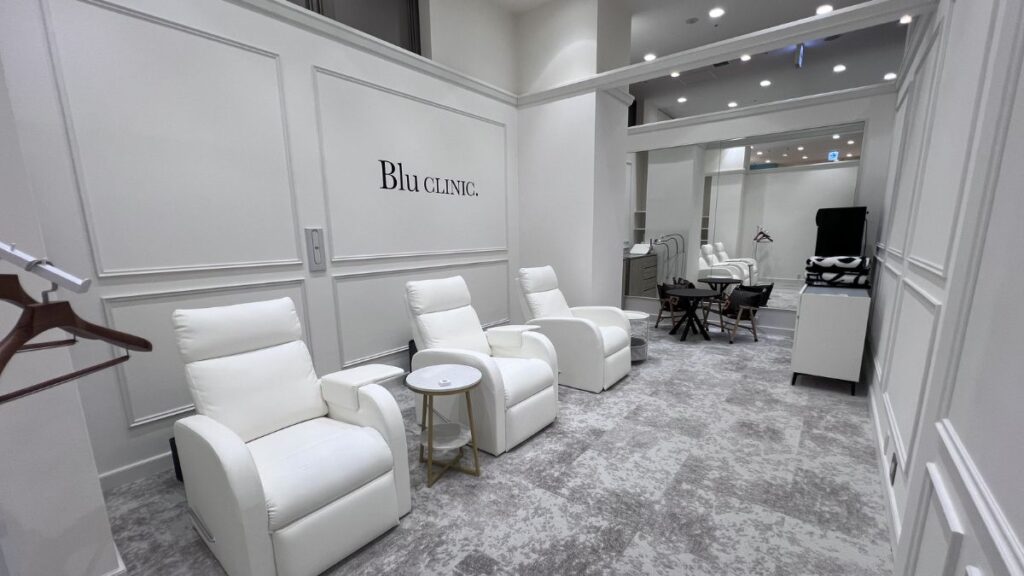
At Blu CLINIC, we believe that cell-level care is the foundation of personal well-being. Under Dr. Saori Shimada’s clinical approach, we prioritize factual clarity over aggressive marketing. We provide a space where you can discuss your physiological goals honestly, supported by our experienced medical staff.
Autologous Adipose-Derived Stem Cell Therapy (MSC Therapy)
[Treatment Details] A treatment where stem cells derived from a small amount of adipose tissue and blood collected from the patient’s abdomen are cultured at an affiliated domestic cell processing facility (CPC), then administered via IV drip or injection.
[Standard Treatment Period & Sessions] Cell culturing takes approximately 3–4 weeks, and administration consists of 3 sessions in total per course.
[Standard Cost] ¥6,050,000 – ¥9,900,000 per course (Tax included) / Private-pay (Not covered by public health insurance). (*Additional administration: ¥1,650,000 per session.)
*Note: Counseling is free of charge, and required preliminary blood testing upon arrival as well as medical interpreter services are included in the treatment package at no extra cost.
[Risks & Side Effects] Pain, swelling, redness, and bruising at the collection or injection sites, transient fever, allergic reactions, and in rare cases, infection or breathing difficulties.
[Notes on Unapproved Products]
(i) This treatment uses regenerative medicine products that have not received approval under Japan’s Pharmaceuticals and Medical Devices (PMD) Act.
(ii) The cells used in this treatment are cultured and processed at an affiliated domestic cell processing facility (CPC) under the physician’s medical judgment, in accordance with Japan’s Act on the Safety of Regenerative Medicine. No personal importation of drugs is involved.
(iii) There are no other domestically approved drugs or medical devices with the same composition or performance.
(iv) Information regarding safety in foreign countries: This treatment has not been widely approved in major Western countries. There is a possibility that severe risks or side effects have not yet been fully identified.
(v) In the unlikely event of a severe side effect, this treatment is not covered by Japan’s Relief System for Sufferers from Adverse Drug Reactions or the Relief System for Infections from Biological Products.
Fibroblast Therapy
[Treatment Details] A treatment where fibroblasts extracted from skin tissue collected from behind the patient’s ear are cultured at a specialized cell processing facility (CPC), then transplanted directly into the dermal layer of areas where wrinkles and sagging are a concern.
[Standard Treatment Period & Sessions] Cell culturing takes approximately 3–5 weeks, and administration consists of 2 to 4 sessions in total, typically every 2 weeks.
[Standard Cost] ¥1,650,000 – ¥4,840,000 per course (Tax included) / Private-pay (Not covered by public health insurance).
*Note: Counseling is free of charge, and required preliminary blood testing upon arrival as well as medical interpreter services are included in the treatment package at no extra cost.
[Risks & Side Effects] Pain, swelling, redness, and bruising at the collection or injection sites, temporary unevenness, and in rare cases, infection.
[Notes on Unapproved Products]
(i) This treatment uses regenerative medicine products that have not received approval under Japan’s Pharmaceuticals and Medical Devices (PMD) Act.
(ii) The cells used in this treatment are cultured and processed at an affiliated domestic cell processing facility (CPC) under the physician’s medical judgment, in accordance with Japan’s Act on the Safety of Regenerative Medicine. No personal importation of drugs is involved.
(iii) There are no other domestically approved drugs or medical devices with the same composition or performance.
(iv) Information regarding safety in foreign countries: This treatment has not been widely approved in major Western countries. There is a possibility that severe risks or side effects have not yet been fully identified.
(v) In the unlikely event of a severe side effect, this treatment is not covered by Japan’s Relief System for Sufferers from Adverse Drug Reactions or the Relief System for Infections from Biological Products.
For more details on costs and treatment options,
please join our local information session.